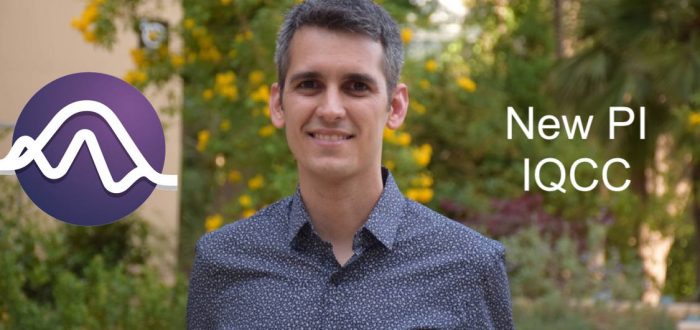
Last Friday November 23rd at the IQCC Council meeting we approved the recognition of Dr. Marc Garcia-Borràs as as Principal Investigator of the institute. Marc and his team will be leading the following research line: “Biocatalytic intermediates for the discovery and design of new enzymatic activities”. In the coming days this new situation will be reflected on

Institut de Química Computacional i Catàlisi
- sec.iqcc@udg.edu
- +34 972 41 83 57
Category: Portada
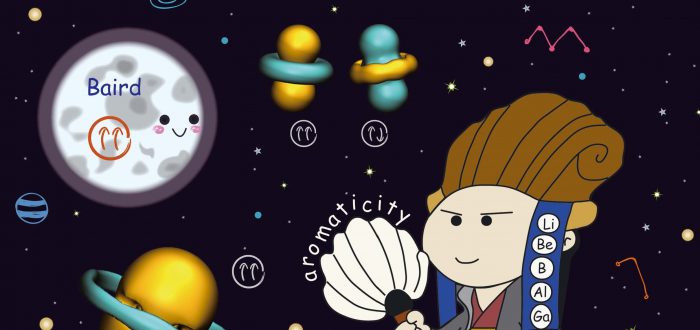
Chemical Communication features on its front cover the recently published article “All-metal Baird aromaticity”. The work has been carried out by Prof. Jun Zhu at the University of Xiamen and Dandan Chen, Dr. Dariusz W. Szczepanik, and Prof. Miquel Solà (members of the IQCC). The cover is the result of the artistic inspiration of Dandan Chen. The
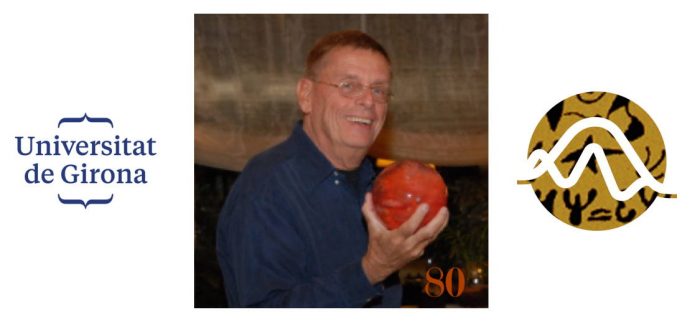
Dr. Ramon Carbó-Dorca Carré will turn 80 next Monday, November 19, 2020. On the occasion of this special day, in his capacity as Emeritus Professor of the University of Girona, he will give an online Master Class. Ramon Carbó-Dorca joined the university studies of Girona in 1986, quickly became a Professor, and was one of
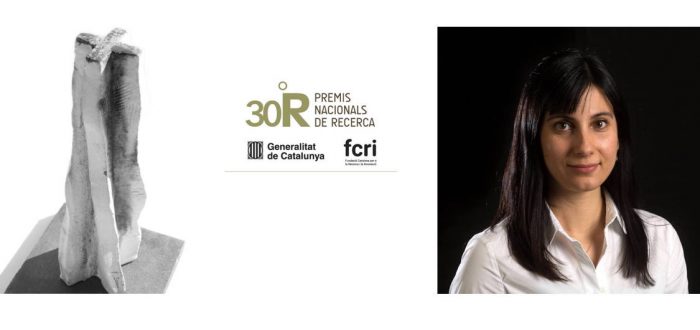
At this moment is taking place at the Palau de la Generalitat in Barcelona the award ceremony for the 2019 Catalonian National Research Awards. Among the awardees is Sílvia Osuna in the category for Young Talent. Below we reproduce (with permission) the translation of an interview that Xavi Aguilar held with Sílvia, and which was published last week
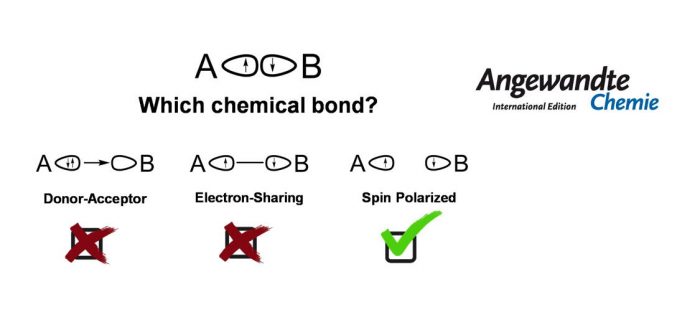
What is a chemical bond? The chemical bond is a central concept for describing and predicting molecular structure and reactivity. Since a chemical bond does not have an operator in quantum mechanics, there is no exclusive approach to describe it unequivocally. A fundamental approach towards understanding its properties consists in classifying the electron-pair interactions between

The interconversion of non-activated alkenes and alcohols, catalysed by (de)hydratases, has great potential in biotechnology for the generation of fine and bulk chemicals. LinD is a cofactor-independent enzyme that catalyses the reversible (de)hydration of the tertiary alcohol (S)-linalool to the triene b-myrcene, and also its isomerization to the primary alcohol geraniol. In this collaboration project
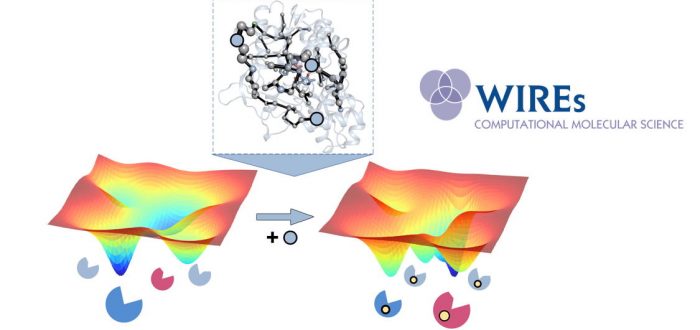
Many computational enzyme design approaches have been developed in recent years that focus on a reduced set of key enzymatic features. Initial protocols mostly focused on the chemical steps(s) through transition state stabilization, whereas most recent approaches exploit the enzyme conformational dynamics often crucial for substrate binding, product release and allosteric regulation. The detailed evaluation
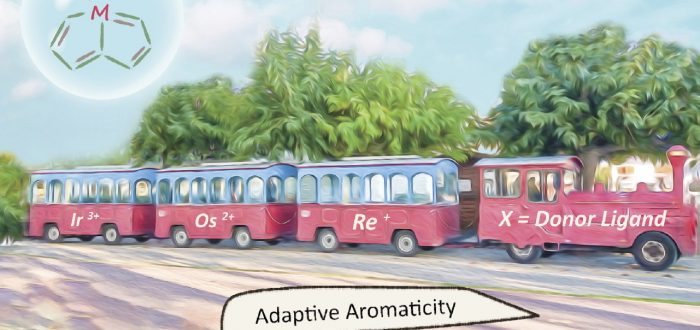
Chemistry-A European Journal in one of its upcoming issues will feature on the front cover work from the group of Prof. Solà and co-workers, which accompanies the paper titled “Probing the origin of adaptive aromaticity in 16?valence?electron metallapentalenes”. In the Cover Profile, the authors explain to the reader the background of the scientific merits of the
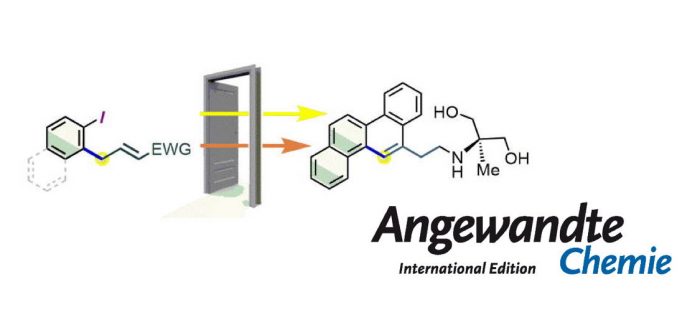
A metal-free C-H allylation strategy is described to access diverse functionalized ortho-allyl-iodoarenes. The method employs hypervalent (diacetoxy)iodoarenes and proceeds through the iodane-guided “iodonio-Claisen” allyl transfer. The use of allylsilanes bearing electron-withdrawing functional groups unlocks the functionalization of a broad range of substrates, including electron-neutral and electron-poor rings. The resulting ortho-allylated iodoarenes are versatile building blocks, with examples
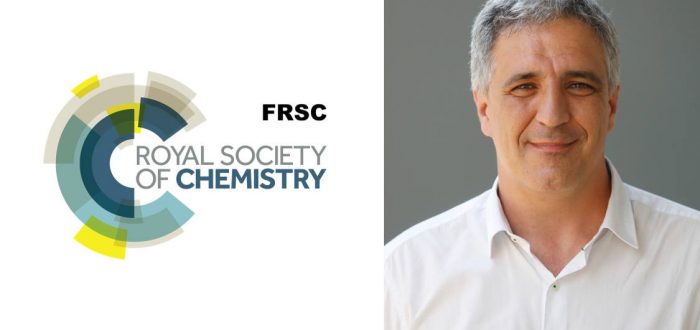
Miquel Costas has recently been selected as a Fellow of the Royal Society of Chemistry (RSC). This scientific society, founded in 1980, aims to promote the understanding and advancement of the chemical sciences. Although the vast majority of more than 54,000 members of the association are British, this is also open to researchers from around