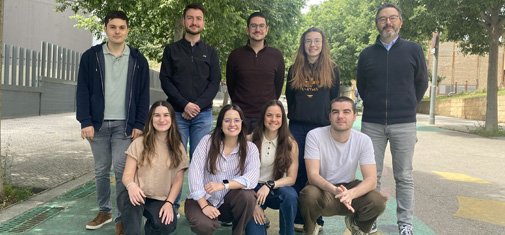
-
Prof. Mestres research focuses on the development and application of computational methods covering the entire lifetime of drugs, from bioactive molecular design to post-marketing safety surveillance. He is the author of over 175 publications in top tier journals in the field, including Nature Rev. Drug Discov., Nature Biotechnol., Drug Discov. Today, Cancer Cell, Trends Pharmacol. Sci., Clin. Pharmacol. Ther., Bioinformatics, J. Med. Chem. and J. Chem. Inf. Model. As of April 2026, his publications accumulate over 10,100 citations, resulting in a H-index of 54. He has excelled also in the knowledge and technology transfer aspects of research. He is co-inventor in 10 patents and the founder of Chemotargets, the company that developed the Clarity platform for predictive off-target pharmacology, acquired in 2020 by Chemical Abstracts Service as the foundation for the new CAS BioFinder Life Sciences platform, and used by major pharmaceutical and biotech companies worldwide.
-
Prof. Mestres’ team focuses on two main research lines, namely, drug design and drug safety, the latter informing the former. Some of the current active projects are described below.
1. Fragment-Based Drug Discovery
Fragment-Based Drug Discovery (FBDD) is a powerful strategy with a proven track record of generating potent bioactive small molecules from low-affinity chemical fragments. Computational approaches to FBDD are often limited by the availability of high-quality, structurally resolved data on fragment binding poses. To address this gap, we have developed a Structurally Augmented Fragment Repository (SAFR), a novel data set designed to support in silico FBDD. Initially, a set of 89,375 high-confident binding poses of bioactive molecules in public sources was obtained by applying a filtering protocol involving 2D ligand similarity and 3D ligand superposition against protein-bound ligand structures followed by scoring with protein–ligand docking and interaction features. Fragmentation of the bioactive ligands in their predicted binding poses resulted in a total of 818,385 fragment-protein interactions between 157,080 unique chemical fragments and environments from 1,142 distinct proteins. Of them, 270,155 are unique fragment-protein interactions, of which 237,284 (88%) are not represented in protein-bound ligands in the PDB. Case studies using SAFR for bioisosteric replacements and scaffold hopping are presented. SAFR is a useful resource to support fragment screening campaigns and hit-to-lead optimization.
It is publicly available at https://zenodo.org/records/18229523.
Recent publication: https://doi.org/10.1021/acs.jcim.6c00217.2. Generative Chemistry
Efficient exploration of chemical space is an essential component of modern generative drug design. We have developed ChemBang, a computational engine that grows small molecules based on chemical transformations extracted by matched molecular pair analysis of all structures available in catalogues of synthesized molecules. Each chemical transformation is mapped onto its associated atomic environment defined as the substructure within a three-atom radius from the transformation site. Unsupervised chemical evolution is then performed in cycles by systematically applying chemical transformations to all exposed atomic environments present in a seed structure. Multiple physicochemical properties and substructural alerts are incorporated to effectively guide the generation of drug-like synthetically accessible molecules. As a use case, the generation of the Erdafitinib structure from any of its three ring systems (pyrazole, benzene and quinoxaline), and the evolution of the property distributions from all molecules generated in each cycle, are discussed in detail. The ability to explore the chemical space of pharmaceutical relevance is shown by successfully generating the exact chemical structure of 95.3% of all 2,809 small-molecule ATC drugs from their constituting fragments.
Recent publication: https://doi.org/10.1002/minf.70036
3. ML-based Safety Models
Modern generative chemistry initiatives aim to produce potent and selective novel synthetically feasible molecules with suitable pharmacokinetic properties. General ranges of physicochemical properties relevant for the absorption, distribution, metabolism, and excretion (ADME) of drugs have been used for decades. However, the therapeutic indication, dosing route, and pharmacodynamic response of the individual drug discovery program may ultimately define a distinct desired property profile. A methodological pipeline to build and validate machine learning (ML) models on physicochemical and ADME properties of small molecules is introduced. The analysis of publicly available data on several ADME properties presented in this work reveals significant differences in the property value distributions across the various levels of the anatomical, therapeutic, and chemical (ATC) drug classification. For most properties, the predicted data distributions agree well with the corresponding distributions derived from experimental data across fourteen drug classes. The refined ADME profiles for ATC drug classes should be useful to guide the de novo generation of advanced lead structures directed toward specific therapeutic indications.
Recent publication: https://doi.org/10.3390/pharmaceutics17030308
4. Safety Signal Detection and Analysis
External factors severely affecting in a short period of time the spontaneous reporting of adverse events (AEs) can significantly impact drug safety signal detection. Coronavirus disease 2019 (COVID-19) represented an enormous challenge for health systems, with over 767 million cases and massive vaccination campaigns involving over 70% of the worldwide population. This study investigates the potential masking effect on certain AEs caused by the substantial increase in reports solely related to COVID-19 vaccines within various spontaneous reporting systems (SRSs). Three SRSs were used to monitor AEs reporting before and during the pandemic, namely, the World Health Organisation (WHO) global individual case safety reports database (VigiBase®), the United States Food and Drug Administration Adverse Event Reporting System (FAERS) and the Japanese Adverse Drug Event Report database (JADER). Findings revealed a sudden over-reporting of 35 AEs (? 200%) during the pandemic, with an increment of the RRF value in 2021 of at least double the RRF reported in 2020. This translates into a substantial reduction in signals of disproportionate reporting (SDR) due to the massive inclusion of COVID-19 vaccine reports. To mitigate the masking effect of COVID-19 vaccines in post-marketing SRS analyses, we recommend utilizing COVID-19-corrected versions for a more accurate assessment.
Recent publication: https://doi.org/10.1038/s41598-023-46275-w
-
Principal Investigator
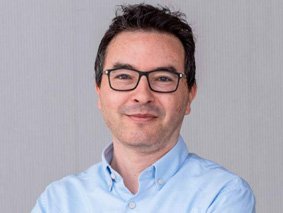
Jordi Mestres
Full Professor

Staff and Postdocs
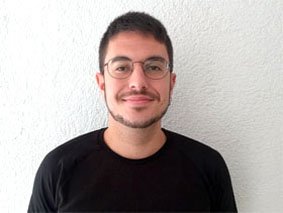
Roger Monreal-Corona
Postdoc
Supervisor
- J. Mestres
PhD and MACMoM students
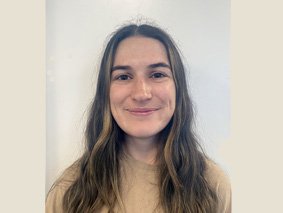
Laia Fortuny
PhD Student
Supervisor
- J. Mestres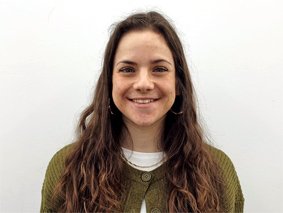
Raquel Parrondo
PhD Student
Supervisor
- J. Mestres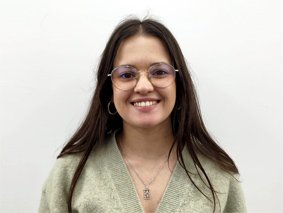
Maria Martínez
PhD Student (DI)
Supervisor
- J. Mestres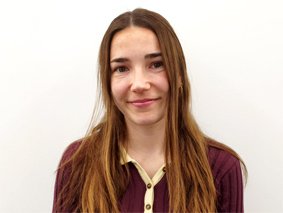
Mariona Isern
PhD Student
Supervisor
- J. Mestres, M. Solà
Joan Cabot
PhD Student (DI)
Supervisor
- J. Mestres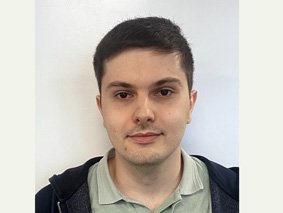
Jordi Busoms
PhD Student
Supervisor
- J. Mestres
Nikola Panajotovikj
PhD Students
Supervisor
- J. Mestres
-
Doctorats Industrials
Project: Models específics d’aprenentatge automàtic per a la millora de les prediccions d’afinitat d’unió proteà¯nes-lligands
Researcher: Jordi Mestres (IQCC) and Xavier Jalencas (Chemotargets)
Reference: 2024 DI 00015
Funding: 37.800 €
Period: 01/06/2024 – 30/05/2027Project: UdG-Chemotargets
Researcher: Jordi Mestres (IQCC) and Xavier Jalencas (Chemotargets)
Reference: 2024 DI 00105
Funding: 37.800 €
Period: 19/11/2025 – 31/12/2028Project: Diseño de fármacos dirigido por inteligencia artificial para proteínas diana huérfanas y difíciles
Researcher: Dr. Jordi Mestres
Reference: PID2020-112539RB-I00
Funding: 60.000 €
Period: 01/09/2021 – 31/08/2024No collaborators found.
IQCC Science Slam 2026, September 29th 12:30h
Since 2015 the IQCC is organizing a Science Slam. On Tuesday September 29th the IQCC organizes the XI edition IQCC Science...
Mestres, Jordi