-
Marcel Swart obtained his PhD degree in Groningen (NL) under the guidance of Profs Berendsen, Canters and Snijders. After postdoctoral stays in Amsterdam (Profs Lammertsma, Bickelhaupt), he was appointed ICREA Junior researcher in 2006 and in 2009 ICREA Professor of Theoretical Chemistry at the IQCC Institute and Dept. Chemistry of Univ. Girona (UdG), only 7 years after his PhD. He was elected Fellow of the Young Academy of Europe in 2014, Fellow of the Royal Society of Chemistry in 2015, and Member of Academia Europaea in 2019. He was Chair of a COST Action (ECOSTBio, 2014-2018), Editor of a Wiley-book on “Spin states in Biochemistry and Inorganic Chemistry” (2015), main organizer for the Girona Seminars 2016/2018, Chair of the Young Academy of Europe (2017-2018), and Director of the IQCC institute (2015-2023).
He is Founding Member (2018) and Vice-President of the QBIC Society (2018-2023) and the computational chemistry division of the Spanish Chemical Society (RSEQ-GEQC; 2018-2025). He is Editor of Inorganica Chimica Acta (2020-now), Member of Editorial College of SciPost Chemistry (2021-now), and Gateway Advisor for Inorganic Chemistry and Collection Advisor Computational Chemistry at Open Research Europe (2022-now). He is member of the Steering Committee of the Barcelona Knowledge Hub of Academia Europaea (2023-now) and member of the SAPEA Working Group on ‘Early and mid-career researchers’ (2023-now).
His research on the development of theoretical chemistry tools was awarded the Young Scientist Excellence Award 2005, the 2012 MGMS Silver Jubilee Prize, and a special award by the Serbian Chemical Society in honour of their 120 anniversary for his continuous support for advancing chemical sciences in Serbia, as first and only foreigner.
-
He works in the field of theoretical (bio)inorganic and supramolecular chemistry, and works on transition-metal complexes, metalloproteins, enzymes, and DNA. The effect of (transition) metal ions on reactivity, selectivity and chemical bonding is one of the main topics in these studies. The development of computational tools for these studies is an important ingredient, to which he has contributed largely both with his own software (QUILD, DRF90) as in contributions in general purpose software (ADF/AMS, CFOUR, NWCHEM).
Spin states of transition-metal complexes
It has long been recognized that metal spin states play a central role in the reactivity of important biomolecules and in inorganic chemistry catalysis. Molecules with different numbers of unpaired electrons, hence with different spin states, have distinct geometric structures, energetic properties and reactivity. Elucidating the role and effect of different spin states on the properties of a system is presently one of the most challenging endeavors both from an experimental and theoretical point-of-view. This is in particular true for reaction mechanisms where the spin-state and/or oxidation state of a metal can change during the reaction. It has been described extensively in the recent Wiley book on “Spin states in Biochemistry and inorganic chemistry: Influence on Structure and Reactivity” (Eds: M. Swart, M. Costas).


Transition-metal reactivity studies
The reaction mechanism of chemical processes with transition-metals can (and often does) involve a switching from one spin-state to another during the reaction. This allows to overcome the low activity of molecules like dioxygen (in its triplet state), and facilitates reactions that would otherwise be spin-forbidden. Moreover, given the wide range of mechanistic possibilities available with the presence of transition-metals, often a multitude of reaction mechanisms has to be considered. In collaboration with experimental groups we are carrying out computational chemistry experiments to characterize intermediates and transition structures, to determine the most favorable reaction path.


Lewis acids: stabilization of vulnerable species and reactivity enhancement
In 2010 a ground-breaking experimental study by Fukuzumi and Nam was published in Nature Chemistry where they showed that adding Sc(OTf)3 to a FeIV-oxo complex (with the TMC ligand) has unprecedented consequences: (i) the axial ligand of iron is removed; (ii) scandium picks up a fourth triflate and an additional fifth axial ligand; (iii) the methyl groups of the TMC-ligand flip upwards (from anti towards oxo, to syn); and (iv) this interaction facilitates a two-electron reduction by ferrocene, instead of the one-electron reduction without the Lewis acid. This has opened a whole new research area where reactive species can be stabilized, or reactivity can be drastically improved. The effect of the Lewis acids on the stability, reactivity and spectroscopic properties is poorly understood, and is being studied here in collaboration with experimental groups.


Development of computational research tools
In order to be able to carry out the spinning around in transition-metal chemistry, new research tools have been developed such as the QUILD program with improved optimization and transition-search routines, and new density functionals (S12g, SSB-D) that work well for both spin states and weak interactions. The advantage of these tools is that they can be applied straightforwardly also to other systems such as DNA, SN2-reactions, NMR chemical shifts and the like


-
Principal Investigator
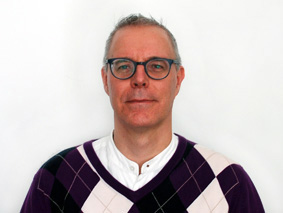
Marcel Swart
ICREA Professor

Staff and Postdocs
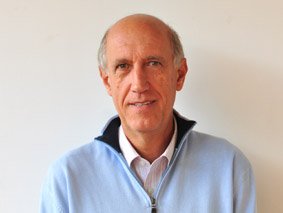
Miquel Duran
Full Professor
PhD and MACMoM students
Zanira Mushtaq
PhD Student (FI)
Supervisor
- M. Swart, A. Lledó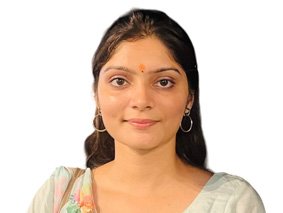
Rupal Sharma
PhD Student (IF-UdG)
Supervisor
- M. Swart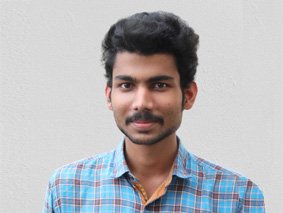
Athul Santha
PhD Student (IF-UdG)
Supervisor
- M. Swart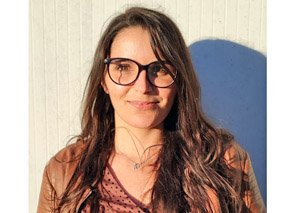
Maria Rosa Mollfulleda
PhD Student (FPI)
Supervisor
- M. Swart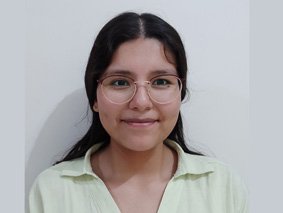
Jonnely Rissell Luizaga
PhD Student
Supervisor
- S. Osuna, M. Swart
Fiza Fariha
PhD Student (FPI)
Supervisor
- M. Swart, A. Lledó
Faiza Ahsan
PhD Student (FI)
Supervisor
- M. Swart
-
Collaboration agreement
Project: Software for Chemistry & Materials (SCM)
Researcher: Marcel Swart
Reference:
Funding: Full site-license ( ca. 11.000 €/year)
Period: 01/01/2006 – 31/12/2038MICIU Proyectos I+D
Project: Quantum chemistry at the interface between biology, chemistry, materials science and physics
Researcher: Prof. Marcel Swart
Reference: PID2023-152415NB-I00
Funding: 137.500 €
Period: 01/09/2024 – 31/12/2027Project: Benchmark of copper peroxo complexes.
Researcher: Marcel Swart
Reference:
Funding:
Period: 01/03/2026 – 30/06/2026Project: Influence of second-sphere substituents on oxidation chemistry.
Researcher: Marcel Swart
Reference:
Funding:
Period: 01/03/2026 – 30/06/2026Project: Development of Sustainable Chemical Processes with Earth Abundant Metals (SUSCHEMEARTH project)
Researcher: Dr. Alicia Casitas (M. Swart)
Reference: LCF/BQ/LR18/11640006
Funding: 305.700 €
Period: –Project: Química predictiva a l’espai confinat
Researcher: Dr. Marcel Swart
Reference: MPCUdG2016-96
Funding: 345.000 €
Period: –Project: A new twist to an old story: reactivity of the first characterized high-valent metal-oxo species
Researcher: Marcel Swart
Reference: UMA-2023-1
Funding: 864000
Period: –Project: Metal-metal bonds waiting to be discovered
Researcher: Marcel Swart
Reference: UMA-2023-1
Funding: 272160
Period: –Project: ioChem-BD
Researcher: Marcel Swart, Miquel Solà, Sílvia Osuna (IP: Carles Bo, ICIQ)
Reference: DATA-2020-1-0016
Funding: 1457280
Period: –Project: Characterization of supramolecular host-guest cages
Researcher: Marcel Swart
Reference: BSC-2012-3
Funding: 90000
Period: 01/09/2020 – 16/06/2026Project: Catalytic mechanism of the Complex II family enzyme Succinate:quinone oxidoreductase (SQR)
Researcher: Marcel Swart
Reference: BSC-2012-3
Funding: 46600
Period: 12/05/2021 – 11/05/2024Project: Catalytic mechanism of the Complex II family enzyme Succinate:quinone oxidoreductase (SQR)
Researcher: Marcel Swart
Reference: BSC-2012-2
Funding: 20000
Period: 16/06/2026 – 16/06/2026Project: Catalytic mechanism of the Complex II family enzyme Succinate:quinone oxidoreductase (SQR)
Researcher: Marcel Swart
Reference: MinoTauro-2012-2
Funding: 34560
Period: 01/10/2021 – 30/09/2023Project: Study of reactivity and regioselectivity of La@C2v(9)-C82
Researcher: Marcel Swart
Reference: UV-2012-1
Funding: 281600
Period: –Project: Formation of diamond-core Fe(IV)2(mu-O)2 complexes
Researcher: Marcel Swart
Reference: BSC-2020-2
Funding: 353660
Period: 01/03/2025 – 30/06/2025Project: Formation of diamond-core Fe(IV)2(mu-O)2 complexes revisited
Researcher: Marcel Swart
Reference: BSC-2020-3
Funding: 478080
Period: 01/03/2025 – 30/06/2025Project: Formation of diamond-core Fe(IV)2(mu-O)2 complexes revisited
Researcher: Marcel Swart
Reference: BSC-2021-1
Funding: 345500
Period: 01/03/2025 – 30/06/2025Project: Interaction of substrate with taste receptors
Researcher: Marcel Swart
Reference: QCM-2014-3-0013
Funding: 59.04
Period: 01/03/2022 – 30/06/2023Project: Molecular chemistry of Alzheimer’s disease
Researcher: Marcel Swart
Reference: QCM-2014-2-0001
Funding: 311.04
Period: 01/03/2022 – 30/06/2023Project: Multi-scale modeling of heme-proteins NMR chemical shifts
Researcher: Marcel Swart
Reference: BSC/MT-2013-2-0027
Funding: 84
Period: 01/03/2022 – 30/06/2023Project: Characterization of supramolecular host-guest cages
Researcher: Marcel Swart
Reference: BSC/MN-MT-2013-2-0012
Funding: 130
Period: 01/01/2021 – 31/12/2023Project: Interaction of taste enhancers with umami taste receptors: study of the molecular mechanism of umami taste synergism
Researcher: Marcel Swart
Reference: QCM-2015-3-0050
Funding: 64.8
Period: –Project: Spinning Resonance Raman spectroscopy
Researcher: Marcel Swart
Reference: QCM-2015-3-0016
Funding: 160
Period: 01/03/2022 – 30/06/2023Project: Interaction of substrate with taste receptors
Researcher: Marcel Swart
Reference: QCM-2015-2-0026
Funding: 57.6
Period: 01/03/2022 – 30/06/2023Project: High-valent reactivity of copper complexes
Researcher: Marcel Swart
Reference: UAM-2020-2
Funding: 190000
Period: –Project: Catalytic mechanism of the Complex II family enzyme Succinate: quinone oxidoreductase (SQR)
Researcher: Marcel Swart
Reference: BSC/MN-MT-2013-1-0010
Funding: 33
Period: 01/11/2020 – 28/02/2021Project: Computational spectroscopy of dinuclear nickel complexes
Researcher: Marcel Swart
Reference: QCM-2018-2-0047
Funding: 331.8
Period: 01/11/2020 – 28/02/2021Project: Competition between superoxo and peroxo species
Researcher: Marcel Swart
Reference: QSB-2020-1
Funding: 216000
Period: 01/03/2020 – 30/06/2020Project: Reactivity of copper complexes
Researcher: Marcel Swart
Reference: QSB-2019-3-0005
Funding: 65660
Period: 01/07/2020 – 31/10/2020Project: Modelling monooxygenase enzymes: reactivity of peroxodiiron species
Researcher: Marcel Swart
Reference: QSB-2019-2-0003
Funding: 253,44
Period: 01/07/2020 – 31/10/2020Project: Reactivity of high-valent nickel complexes
Researcher: Marcel Swart
Reference: QSB-2019-2-0006
Funding: 269.57
Period: 01/07/2020 – 31/10/2020Project: High-valent organometallic iron
Researcher: Marcel Swart
Reference: CSUC-2022-1
Funding: 217000
Period: 01/03/2022 – 30/06/2022Project: Superoxide dismutase activity in watersoluble porphyrins
Researcher: Marcel Swart
Reference: BSC/MN-2022-2
Funding: 130000
Period: 01/07/2022 – 31/10/2022Project: High-valent reactivity of iron complexes
Researcher: Marcel Swart
Reference: QSB-2020-1
Funding: 322560
Period: 01/03/2020 – 30/06/2020Project: Beatriu de Pinós
Researcher: Dr. Alexandra Teresa Pires Carvalho (M. Swart)
Reference: 2010 BP-B 00238
Funding: 74.528 €
Period: 30/04/2012 – 28/02/2013Project: Beatriu de Pinós
Researcher: Dr. Ferran Feixas (M. Swart)
Reference: 2010 BP_A2 00022
Funding: 39.232 €
Period: 01/05/2014 – 01/05/2015Project: Spin state catalysis trought density-consistent molecular modelling (SpinStateCat-EurExc)
Researcher: Dr. Marcel Swart
Reference: CTQ2015-70851-ERC
Funding: 60.000 €
Period: 01/11/2015 – 31/10/2016Project: Characterization and prediction of short-lived transition-metal species
Researcher: Dr Marcel Swart
Reference: CTQ2017-87392-P
Funding: 89.540 €
Period: 01/01/2018 – 31/08/2021Project: Modelización multiescalar en(Bio)Química
Researcher: Dr. Marcel Swart
Reference: CTQ2011-25086
Funding: 67.000 €
Period: 01/12/2012 – 31/12/2014Project: Spin state and enzymatic catalysis based on bottom-up computational design (SpinEnzymeCat)
Researcher: Dr. Sílvia Osuna and Dr. Marcel Swart
Reference: CTQ2014-59212-P
Funding: 116.160 €
Period: 01/01/2015 – 31/12/2017Project: Functionalizing densities
Researcher: Dr. Marcel Swart
Reference: EIN2019-103469
Funding: 10.000 €
Period: 01/06/2019 – 31/05/2021Project: Correlating functionality
Researcher: Dr Marcel Swart
Reference: PID2020-114548GB-I00
Funding: 121.000 €
Period: 01/09/2021 – 31/08/2024Project: Chair (ECOSTBio)
Researcher: Dr. Marcel Swart
Reference: CM1305
Funding: 568.000 €
Period: 19/11/2025 – 19/11/2025Project: Accelerating metal-directed assembly, recognition and catalysis with computational methods (mETaCCEMBLY)
Researcher: Dr. Ferran Feixas (M. Swart)
Reference: H2020-MSCA-IF-2014-661160
Funding: 158.121 €
Period: 01/05/2015 – 30/04/2017Project: Juan de la Cierva
Researcher: Dr. Mursaleem Ansari (M. Swart)
Reference: JDC2022-049287-I
Funding: 67.400 €
Period: 01/04/2024 – 31/03/2026Collaboration with Marcel Swart
- Matthias Bickelhaupt – Vrije Universiteit Amsterdam (Netherlands)
- Wesley Browne – University of Groningen (Netherlands)
- Alicia Casitas – University of Marburg (Germany)
- Leroy Cronin – University of Glasgow (United Kingdom)
- Célia Fonseca – Leiden University (Netherlands)
- Isaac Garcia-Bosch – Carnegie Mellon University (United States)
- Nicole Grobert – Oxford (United Kingdom)
- Maja Gruden – Univ. Belgrade (Serbia)
- Ken Houk – UCLA (United States)
- Ken Karlin – Johns Hopkins University (United States)
- Aidan McDonald – Trinity College Dublin (Ireland)
- Christine McKenzie – Southern Denmark University (Denmark)
- Franc Meyer – University of Göttingen (Germany)
- Larry Que – Universty of Minnesota (United States)
- Lawrence Que Jr. – University of Minnesota (United States)
- Adoración Quiroga – Universidad Autónoma de Madrid (Spain)
- Kallol Ray – Humboldt University of Berlin (Germany)
- Moniek Tromp – University of Groningen (Netherlands)
IQCC Science Slam 2026, September 29th 12:30h
Since 2015 the IQCC is organizing a Science Slam. On Tuesday September 29th the IQCC organizes the XI edition IQCC Science...Dalton Horizon Symposium 2026
Last Monday 18th of May, Prof. Marcel Swart organized the Dalton Horizon Symposium at Sala IQCC. The event Dalton Horizon...Ciència en Equip 2026 at IQCC
Every year in April since 2014 is organizing the Ciència en equip. It is a science fair mainly led by secondary school students Ciència en...IQCC open doors 2026
A few times a year, the IQCC opens its doors and gives the opportunity to high-school students to IQCC open...
Swart, Marcel
Spinning around in transition-metal chemistry
Contact info:
Prof. Marcel Swart marcel.swart@udg.edu Tel. (+34) 689 961 777